In apparel manufacturing, maintaining quality while reducing production costs is one of the biggest challenges for brands, sourcing managers, and startup fashion labels. Price pressure is constant, yet buyers know that sacrificing quality ultimately damages brand reputation, increases return rates, and weakens long-term customer loyalty.
Fortunately, cost reduction does not have to mean lower quality. When approached strategically, brands can optimize raw materials, streamline communication with factories, and improve production planning to achieve meaningful savings without affecting the final product.
This guide outlines seven highly effective methods used by professional apparel manufacturers and global sourcing teams to reduce costs while maintaining (or even improving) quality standards.
1. Optimize Fabric Selection Through Strategic Sourcing
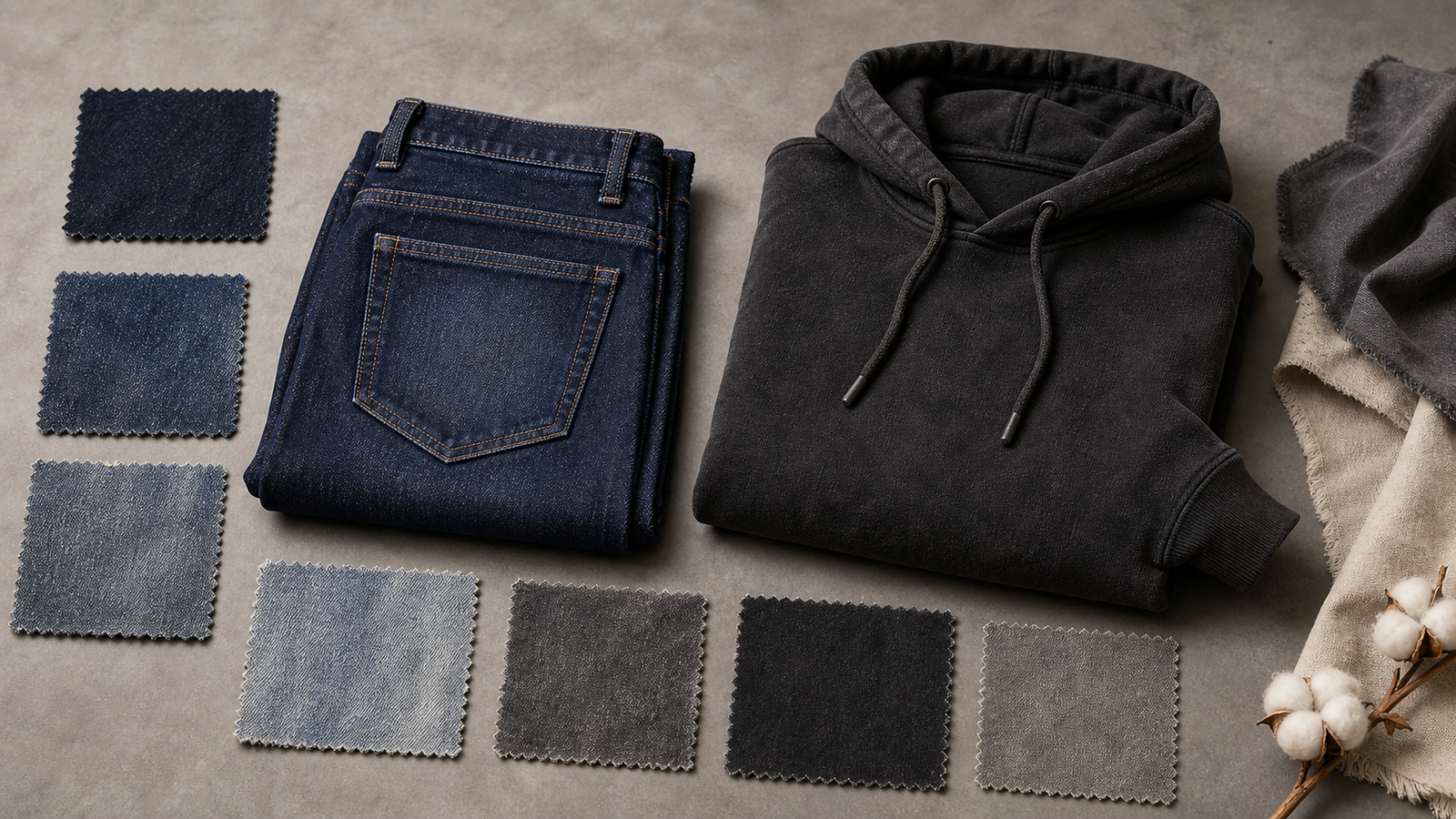
Fabric typically accounts for 55%–70% of garment cost in categories like hoodies, sweatshirts, T-shirts, and denim. For this reason, smart fabric selection delivers some of the most significant savings.
1.1 Choose fabrics with stable supply chains
Working with mills that produce consistent, large-volume fabrics reduces risks and lead times. When a fabric is widely available, mills offer better prices and fewer minimums. For example, switching from a custom-developed terry fabric to a mill’s existing 350GSM French terry can reduce base cost by 8–15%.
1.2 Avoid unnecessarily high GSM
Higher GSM does not always equal better quality. Many premium brands prefer 280–320GSM hoodies for balance between durability and comfort. If your market does not require heavy-weight fabric, adjusting GSM slightly can reduce material cost without affecting perceived quality.
1.3 Use alternative yarn blends
A 90/10 cotton–poly blend or 80/20 cotton–poly blend often performs as well as 100% cotton in shrinkage, color fastness, and pilling resistance—at a lower cost.
1.4 Order fabrics in consolidated batches
If you produce multiple styles, combining fabric orders into one bulk purchase can secure stronger pricing from mills.
2. Simplify Tech Packs and Reduce Over-Engineering
Over-engineered apparel increases cost without improving customer experience. Many brands add details that buyers never notice or appreciate.
2.1 Eliminate unnecessary details
Elements such as extra panels, complex seam placements, oversized appliqués, and multi-color prints increase sewing time, material wastage, and risk of defects. Reducing just one unnecessary panel can save 3–7% in labor costs.
2.2 Use standardized trims and accessories
Custom zipper pullers, metal hardware, or unique drawcord tips might look appealing, but they drastically raise MOQ and unit costs. Using factory-standard trims maintains quality while avoiding waste.
2.3 Stick to clear, mistake-proof tech packs
Ambiguous instructions lead to sampling delays and production errors. Every revision increases labor cost. Clear specs reduce the need for multiple sample rounds and help the factory minimize rework.
3. Optimize Pattern and Fit for Efficient Production
The pattern directly influences fabric consumption and sewing efficiency.
3.1 Improve marker efficiency
A carefully optimized marker layout can reduce fabric usage by 3–6%. For large-volume orders, this is a major cost saver.
3.2 Standardize measurement gradings
Using consistent grading rules across multiple styles reduces the amount of pattern-making work and allows factories to reuse block patterns.
3.3 Avoid fabrics with high defect rates
For example, loosely knitted fabrics or heavily washed denim often lead to higher rejection rates. Choosing materials with reliable behavior reduces waste, rework cost, and QC failures.
4. Consolidate Orders to Reduce MOQs and Wastage
MOQ is a major cost factor for small and mid-sized brands.
4.1 Combine colorways using the same base fabric
When all colors share the same GSM, composition, and yarn, mills can dye in bulk and reduce unit cost.
4.2 Simplify sizing breakdowns
Unbalanced size ratios force factories to buy extra fabric. A standardized S–M–L–XL ratio minimizes leftover materials.
4.3 Reduce the number of styles per season
Producing fewer styles but larger quantities per SKU lowers cutting, sewing, and QC costs across the board.
5. Improve Communication and Production Planning
Miscommunication is one of the most expensive hidden costs in manufacturing.
5.1 Provide accurate forecasts early
Factories offer better pricing when they can plan labor and machine schedules in advance.
5.2 Approve samples quickly
Delays in sample approvals compress production timelines and create overtime cost. Efficient decision-making keeps production balanced and cost-efficient.
5.3 Use a digital approval workflow
Clear documentation of fabric consumption, trims, stitching, and color standards reduces misunderstandings and prevents quality issues that lead to expensive rework.
6. Strengthen Quality Control to Avoid Costly Defects
Poor quality leads to returns, remakes, and wasted production capacity—all of which increase cost far more than investing in proper QC.
6.1 Conduct inline QC instead of final QC only
Inspecting garments while sewing is in progress helps identify problems early. This prevents hundreds of defective pieces from being completed before the issue is caught.
6.2 Ensure fabric testing before cutting
Testing for shrinkage, colorfastness, and twisting prevents post-production problems. Fixing issues after garments are completed is significantly more expensive.
6.3 Use standardized QC checklists
Factories work more efficiently when they follow clear, consistent QC requirements. This also increases transparency for brands working remotely.
7. Build a Long-Term, Strategic Partnership with Your Manufacturer
Long-term relationships always lead to better pricing, smoother communication, and stronger quality control.
7.1 Commit to seasonal or annual planning
Manufacturers reward predictable business with lower pricing and priority scheduling.
7.2 Trust the factory’s technical recommendations
Experienced factories often suggest:
more efficient fabric choices
better-fitting block patterns
simplified construction
reliable trim alternatives
These recommendations reduce cost while keeping quality stable.
7.3 Maintain transparent communication
Factories are more willing to offer favorable terms when the relationship is built on trust, realistic expectations, and clear feedback.
Conclusion: Reducing Cost While Maintaining Quality Is About Strategy, Not Sacrifice
Apparel brands do not need to compromise on quality to achieve cost savings. By optimizing fabric sourcing, simplifying designs, improving technical specifications, planning production more efficiently, and strengthening partnerships with manufacturers, significant cost reductions are not only possible—they’re sustainable.
If you are looking for a manufacturer that prioritizes both cost efficiency and product quality, our team specializes in helping global brands produce high-quality apparel with transparent pricing and optimized workflows.
Visit ZEKA Apparel to explore our manufacturing capabilities, review our production process, or request a customized quotation for your next collection.


 English