Garment washing techniques can change far more than the color of a finished garment. The wash also affects hand feel, shrinkage, measurements, surface texture, colorfastness, seam appearance, and sometimes fabric strength. For clothing brands developing custom denim or heavyweight hoodies, the wash should therefore be specified as part of product engineering—not added as a styling note at the end.
This guide explains the most common wash effects, how denim and hoodie fabrics respond differently, and what a brand should approve before bulk production. It is written for independent labels testing a small run as well as established brands that need repeatable results across larger orders.
What Does Garment Washing Change?
Garment washing takes place after a product has been cut and sewn. Unlike a simple home laundry cycle, a commercial wash can combine water, temperature, mechanical action, enzymes, stones, pigments, oxidizing agents, softeners, and controlled drying. The recipe is adjusted to create a target look and feel.
Depending on the fabric and process, washing may change:
- color depth, fading, and contrast;
- softness and surface hairiness;
- waist, chest, body length, sleeve length, and other finished measurements;
- fabric weight and perceived thickness;
- seam puckering, edge abrasion, and vintage character;
- stretch recovery and dimensional stability;
- print, embroidery, label, and trim performance.
This is why a brand should evaluate the garment in its finished, washed state. Approving an unwashed sample does not prove that the bulk product will fit or look correct after washing.
7 Common Garment Washing Techniques
| Wash technique | Typical result | Often used for | Main production concern |
|---|---|---|---|
| Rinse or garment wash | Cleaner surface, softer hand, mild shrinkage | Denim, twill, cotton basics | Dimensional change |
| Enzyme wash | Softer surface and controlled worn-down look | Denim and cotton-rich garments | Over-processing can weaken the surface |
| Stone wash | Faded highs and lows with visible abrasion | Jeans, denim jackets, selected heavyweight garments | Inconsistent abrasion or damage |
| Acid, bleach, or ice-style wash | High-contrast, mottled, dramatic fading | Denim and fashion streetwear | Fiber damage, shade variation, neutralization |
| Mineral or vintage wash | Cloudy, broken-in, irregular tonal effect | Hoodies, T-shirts, streetwear | Piece-to-piece variation |
| Pigment wash | Muted, sun-faded color concentrated near the surface | Hoodies, tees, casualwear | Crocking and gradual color loss |
| Garment dye | Finished garment dyed as one piece | Cotton hoodies, tees, casual collections | Trim compatibility, shrinkage, shade control |
1. Rinse Wash or Basic Garment Wash
A basic garment wash removes processing residues, relaxes the fabric, and gives the product a cleaner, softer hand. In denim, it can remove sizing while retaining a relatively dark appearance. In hoodies, a controlled wash may soften the fleece or French terry and reduce the “new fabric” stiffness.
It appears simple, but time, temperature, detergent, load size, and drying still influence shrinkage and torque. Brands should record finished measurements, not assume the result will match the pre-wash sample.
2. Enzyme Wash
Cellulase enzymes act on cotton’s surface fibers. The result can be a smoother hand, less surface fuzz, and a controlled faded effect. Enzyme washing is widely associated with denim, but it can also be used on cotton-rich knit garments when the recipe is compatible with the fabric and desired finish.
The balance matters. Too little processing may not produce the approved look; too much can cause excessive weight loss, weak areas, or unwanted color change. The Cotton Incorporated technical bulletin on cotton garment washing explains how cellulase processes can create a washed appearance with fewer or no stones, depending on the application.
3. Stone Wash
Stone washing uses abrasion—traditionally from pumice or other suitable media—to remove color from raised areas and soften the garment. It creates the high-low contrast that many buyers associate with worn denim.
The technique can produce strong character, but the production team must control the stone-to-garment ratio, cycle time, machine load, fabric construction, and damage risk. Pocket edges, belt loops, seams, cuffs, and rib panels may react faster than flat areas.
4. Acid, Bleach, and Ice-Style Washes
These names are often used loosely in fashion. The intended result is usually a bold, mottled, or high-contrast fade created through controlled oxidation and abrasion. The term “acid wash” is common in the market, even though the active chemistry may not be a simple acid treatment.
Because aggressive oxidation can damage cellulose, neutralization and thorough rinsing are critical. Brands should review fabric strength, odor, shade, and hand feel—not only the first visual impression.
5. Mineral or Vintage Wash
Mineral and vintage washes are popular for streetwear because they create a cloudy, lived-in surface rather than a perfectly flat color. On a heavyweight hoodie, the effect can highlight seams, ribs, folds, and construction details.
Natural variation is part of the design, but “variation” should not mean unlimited inconsistency. The brand and manufacturer still need an approved shade range, contrast level, and list of unacceptable defects.
6. Pigment Wash
Pigment color sits closer to the surface than a fiber-reactive dye, which helps create a muted, worn-in appearance. Pigment-washed hoodies and T-shirts often have an intentionally faded character that continues to evolve with wear.
Because surface color can transfer or fade, brands should define acceptable dry and wet rubbing performance, care instructions, and the visual change expected after repeated washing.
7. Garment Dyeing
Garment dyeing colors the finished sewn product instead of dyeing the fabric before cutting. It can produce rich yet slightly irregular tones and allows a brand to develop color after the garment shape has been established.
The fabric, sewing thread, labels, drawcords, zippers, and other trims must be selected with the dye route in mind. Otherwise, the main garment and components may absorb color differently. If you are developing premium fleece, our heavyweight fabric GSM guide explains why composition and weight must be considered before choosing the finish.
Denim Washing vs. Hoodie Washing
Denim and hoodie fabrics can use some of the same wash names, but they do not behave in the same way.
For Custom Denim
- Indigo loses color through abrasion and oxidation, creating contrast at seams and raised areas.
- Rigid, stretch, and lightweight denim require different recipes.
- Washing can change waist, hip, rise, inseam, leg opening, and seam twist.
- Whiskers, hand sanding, grinding, and other dry processes may be combined with wet washing.
- The approved appearance must be checked together with post-wash fit.
Brands developing jeans should coordinate fabric, pattern allowance, construction, and wash from the start. See our custom jeans manufacturing service for available product-development support.
For Custom Hoodies
- High-cotton fleece and French terry generally respond more visibly than synthetic-heavy blends.
- Body fabric and rib must shrink and shade in a compatible way.
- Heavyweight construction needs enough strength for the selected mechanical or chemical process.
- Print, embroidery, drawcords, eyelets, labels, and zippers may need to be applied before or after washing depending on the effect.
- Irregular fading is often intentional, but severe crease marks, holes, and unmatched panels are not.
For product options and construction details, visit our custom hoodie manufacturing service.
How to Choose the Right Wash for Your Collection
Start with the product goal rather than the wash name. A useful development brief should answer five questions:
- What visual effect is required? Clean, lightly worn, cloudy, high-contrast, sun-faded, or heavily distressed?
- What hand feel is required? Crisp, dry, smooth, broken-in, peach-like, or very soft?
- Which fabric is being used? Record composition, construction, weight, stretch direction, and base color.
- Which details must be protected? Consider prints, embroidery, ribs, labels, hardware, and distressed areas.
- How much variation is acceptable? Define shade, contrast, measurements, and defects that pass or fail.
A reference photo is helpful, but a photo alone cannot define hand feel, shrinkage, strength, or acceptable shade variation. Whenever possible, approve a physical sample and keep it as the production standard.
Sampling Garment Washes for Low-MOQ Orders
Low MOQ does not eliminate development work. In fact, a small order gives a brand less room to absorb rejected units, so sample approval becomes even more important.
A practical sample sequence is:
- Confirm the fabric and construction. A wash approved on one cotton content or weight may not transfer to another.
- Create the first wash trial. Compare shade, contrast, hand feel, measurements, and trim behavior.
- Adjust the recipe. Record the changes rather than relying on verbal descriptions.
- Approve a sealed sample. Mark it clearly as the visual and dimensional reference for bulk.
- Confirm bulk tolerances. Agree on the acceptable shade range, shrinkage, measurement tolerance, and defect limits.
If this is your first custom order, read our guide to garment sample production. A clear specification also prevents the common problems described in our article on tech pack mistakes.
Post-Wash Quality Control Checklist
Visual approval is only one part of wash quality control. A brand or sourcing team should consider the following checks:
- Shade and contrast: compare bulk pieces with the approved standard under consistent lighting.
- Finished measurements: check critical points after washing and drying.
- Shrinkage and torque: confirm length, width, seam twist, and panel distortion.
- Colorfastness: evaluate washing and rubbing performance using methods appropriate to the product and target market.
- Fabric and seam strength: inspect for weak areas, holes, broken stitches, or excessive abrasion.
- Trim compatibility: examine ribs, drawcords, zippers, snaps, labels, prints, and embroidery.
- Hand feel and odor: compare softness and confirm that the garment is properly rinsed and finished.
- Piece-to-piece consistency: use an agreed shade band or acceptable range rather than judging one sample in isolation.
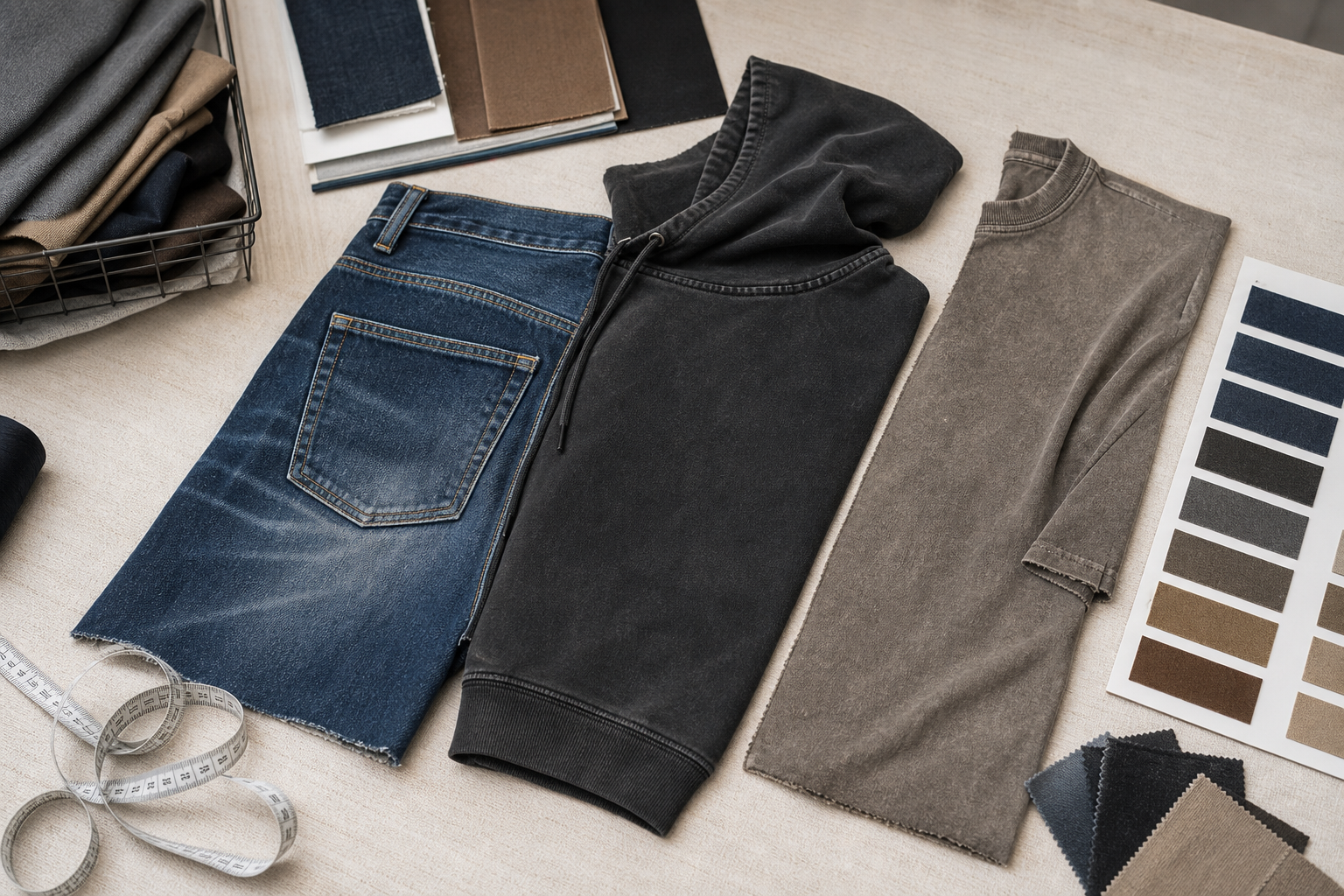
These controls are especially important when production moves from a lightly loaded sample machine to a larger bulk load. For a wider sourcing checklist, see how to reduce risk when ordering custom apparel overseas.
Working With a Manufacturer and Partner Wash Facility
A clothing manufacturer does not need to own every specialist machine to manage a wash program well. What matters is whether responsibility is clear across fabric selection, pattern allowance, wash development, sample approval, bulk scheduling, and final inspection.
ZEKA coordinates specialized washing with experienced partner wash facilities. Our role is to connect the brand’s design intent with garment construction, sample development, documented approval standards, and finished-product quality control. We support both independent labels using flexible MOQs and established brands that need a structured production process.
If your design requires a custom silhouette before washing, learn more about our cut and sew manufacturing process.
Responsible Questions to Ask About Washing
Wet processing can use significant water, energy, and chemistry. A responsible sourcing conversation should go beyond a vague “eco wash” claim. Ask the production team:
- Which chemicals and process steps are required for the approved effect?
- How are recipes, temperature, time, and machine loads controlled?
- How is wastewater handled by the processing facility?
- Can a lower-impact enzyme, reduced-stone, laser, ozone, or other alternative achieve a comparable result?
- Which tests or compliance documents are required for the destination market?
The best option depends on the exact fabric, effect, order volume, facility capability, cost, and performance requirements. Avoid presenting a process as “sustainable” without evidence that applies to the specific order.
Frequently Asked Questions
What is garment washing in apparel manufacturing?
Garment washing is a controlled wet or finishing process applied after a garment is sewn. It can clean, soften, fade, dye, abrade, or stabilize the product, depending on the recipe and material.
Which wash is best for denim?
There is no single best denim wash. A rinse preserves a dark, clean appearance; enzyme and stone washes create softer vintage effects; and controlled oxidation produces stronger contrast. The correct choice depends on the denim construction, stretch, target shade, hand feel, and durability requirements.
Can hoodies be stone washed or acid washed?
Yes, selected cotton-rich hoodie fabrics can be developed with vintage, mineral, stone, or high-contrast wash effects. Fabric weight, composition, rib compatibility, trims, and strength should be tested before bulk production.
How much shrinkage should a brand expect after garment washing?
There is no reliable universal percentage. Shrinkage depends on fiber content, yarn, knit or weave construction, fabric finishing, wash recipe, temperature, mechanical action, and drying. The production pattern and size specifications should be based on measured wash trials.
Does a special wash increase the MOQ?
It can. Wash facilities need workable machine loads, consistent fabric lots, and controlled recipes. The practical MOQ varies by effect, color, style, and facility. A manufacturer offering low-MOQ development should confirm what can be sampled and repeated before the order is placed.
How can brands control color consistency in washed garments?
Approve a physical standard, define an acceptable shade range, keep fabric lots controlled, record the wash recipe, compare bulk pieces under consistent lighting, and inspect multiple units across the production lot—not just one top sample.
Plan Your Next Washed Denim or Hoodie Style
A successful wash starts with aligned decisions: fabric, construction, target appearance, finished measurements, sample approval, and bulk tolerances. When these details are documented early, both small and large brands can reduce surprises and create a product that is easier to repeat.
To discuss a custom denim, hoodie, or garment-wash project, contact ZEKA for a development review and quotation.
 English