How to Compare Private Label Clothing Manufacturers

The best private label clothing manufacturer is not simply the cheapest supplier. For an apparel brand, the right partner should match your product category, minimum order quantity, sampling process, material requirements, quality-control expectations and communication needs.
This 2026 buyer guide compares five manufacturing options by customization, MOQ, lead times and product focus. Use it to build a shortlist and prepare better questions before requesting samples or quotations.
If you are ready to discuss a collection instead of comparing options, visit our private label clothing manufacturing service for development, branding and packaging information.
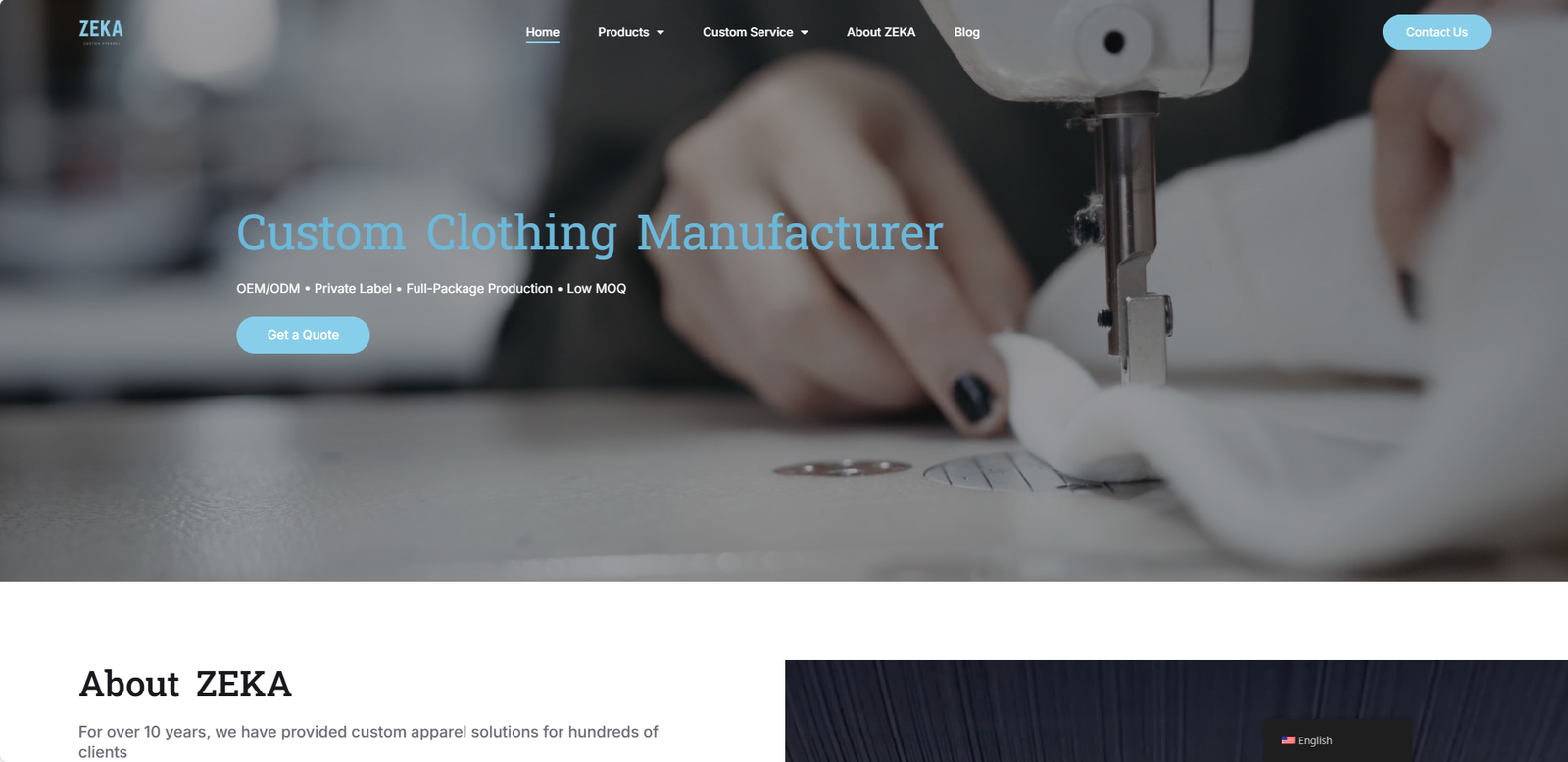
1. ZEKA Apparel – Best Overall for High-End Customization
(Best For: Premium Streetwear, Startups, and Brands focusing on Quality)
ZEKA Apparel tops our list for 2026 as the premier choice for brands that refuse to compromise on quality. While many China private label clothing suppliers focus solely on volume, ZEKA has carved out a niche by offering “accessible premium customization.”
They are particularly dominant in the knitwear category, widely regarded as a top-tier private label t shirt manufacturer and private label hoodies expert. Unlike traditional factories that ignore small brands, ZEKA’s infrastructure is built to support high-growth startups and established labels alike.
Key Features:
Flexible MOQs: ZEKA offers one of the most brand-friendly Minimum Order Quantities in the industry, starting at just 50 pieces per design. This allows brands to test new styles without overstocking.
Speed & Efficiency: With a sample turnaround of 7-10 days and bulk production in 25-35 days, they offer a perfect balance—faster than massive traditional factories, but with more rigorous quality control than “fast fashion” workshops.
Full Customization (Cut & Sew): They don’t just print on blanks. They offer complete private label clothing services, including custom grading, fabric sourcing, and specialized dyeing processes.
Pros:
Specialist Expertise: Unmatched quality in heavyweight cotton, hoodies, and tees.
Startup Friendly: Low MOQ (50 pcs) significantly reduces entry risk.
End-to-End Service: From tech pack consultation to final packaging.
Communication: English-speaking team that understands Western design aesthetics.
Cons:
Pricing: Higher cost per unit compared to bottom-tier white label suppliers (you pay for the quality).
Focus: They focus on knitted apparel (tees, hoodies, sweats) rather than complex formal wear (suits).
Verdict: If you want to build a serious brand with retail-quality products, ZEKA Apparel is the #1 recommendation.
2. Billoom Fashion – Best for Ultra-Low Cost & High Volume

(Best For: Discount Chains, Promotional Merch, Mass Market Basics)
If your primary business model is competing on price wars (e.g., selling $10 t-shirts) and you have a massive budget, Billoom Fashion is a strong contender. As one of the largest private label wholesale clothing suppliers in Southeast Asia, they specialize in churning out millions of units for big-box retailers.
This type of manufacturer is the engine behind many fast-fashion giants. They are excellent if you need standard, basic silhouettes in enormous quantities and aren’t too concerned about intricate details or luxury finishing.
Pros:
Lowest Unit Price: Hard to beat their cents-per-unit cost on massive runs.
Scale: Capable of producing hundreds of thousands of units per month.
Cons:
High Barrier to Entry: MOQs usually start at 1,000+ or 5,000+ pieces per color.
Limited Communication: Expect slow responses and a lack of design support.
Rigidity: They are essentially white label mfg giants; they won’t adjust their production line for your unique custom pocket design.
Verdict: Go here only if you are ordering container loads of basic items and price is your only metric.
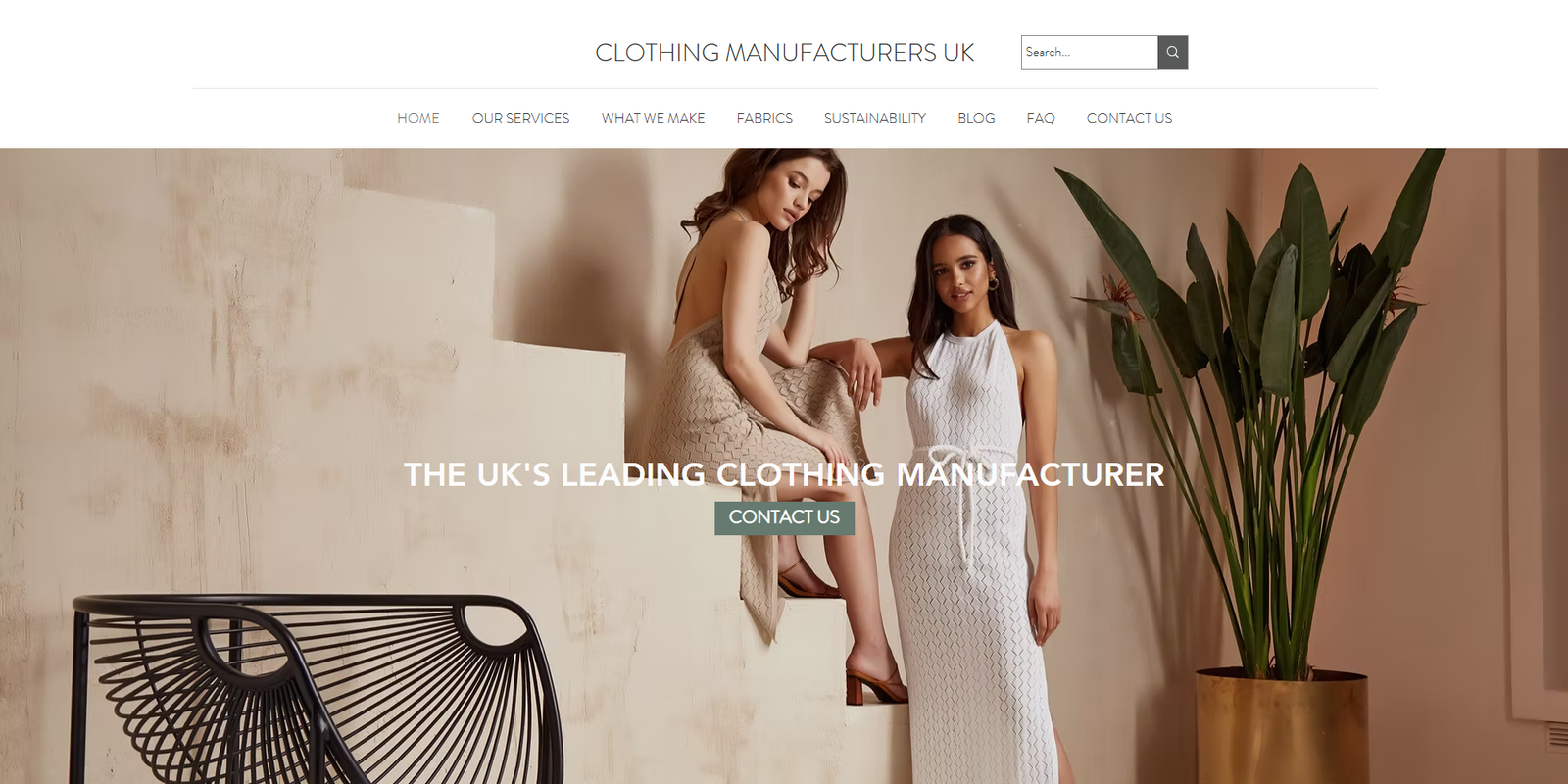
3. Clothing manufactuers UK – Best for Local Sampling & Speed
(Best For: Luxury Runways, Quick Prototypes, “Made in USA” Marketing)
For brands where the “Made in USA” or “Made in UK” tag is the entire selling point, Clothing manufactuers UK represents the best of local manufacturing. While private label apparel brands often look overseas for scalability, local studios are fantastic for hands-on product development.
These manufacturers allow you to visit the factory floor in person, making them ideal for high-end designer labels that need to monitor every stitch of a complex garment.
Pros:
Proximity: No shipping delays; same time zone communication.
Ethical Marketing: Easier to market as locally made.
Cons:
Extremely High Cost: Labor costs can be 5-10x higher than China private label clothing suppliers, eating into your profit margins.
Capacity Issues: Small studios often struggle to scale up once your brand grows.
Limited Supply Chain: They often still have to import fabrics, negating some speed advantages.
Verdict: Perfect for sampling or ultra-luxury items ($200+ t-shirts), but difficult to scale a profitable business model on.
4. Noname – Best for Zero Inventory Risk

(Best For: YouTubers, Influencer Merch, Hobbyists)
If you are testing a concept with absolutely zero budget for inventory, platforms like Noname effectively serve as white label suppliers for the masses. This model allows you to upload a graphic, place it on a generic white label t-shirt, and sell it without ever touching the product.
While this is the easiest entry point into private label fashion, it is rarely a sustainable model for a serious clothing brand in 2026.
Pros:
Zero Upfront Cost: You only pay when a customer buys.
Automated Fulfillment: They handle shipping directly to your customer.
Cons:
Razor-Thin Margins: You might make $2 on a $25 shirt.
Zero Quality Control: You never see the product before it ships. If the print peels, your brand reputation takes the hit.
Generic Blanks: Everyone uses the same white label clothes. You cannot change the fit, fabric, or tag to create a true private label clothing experience.
Verdict: Great for a side hustle, but impossible to build a high-value brand asset with.
5. Alibaba – Best for Sourcing Variety

(Best For: Finding Accessories, Trims, and Niche Items)
Unlike a direct factory like ZEKA Apparel, directories like Alibaba are search engines connecting you to thousands of random private label wholesale clothing traders. If you are looking for something extremely niche—like a specific zipper pull or a cheap promotional cap—these platforms are useful.
However, for core products like private label hoodies or premium tees, navigating these waters can be treacherous.
Pros:
Endless Options: You can find suppliers for everything from socks to wedding dresses.
Price Transparency: Easy to compare quotes from 50 different vendors.
Cons:
Middlemen Galore: Many “manufacturers” listed are actually trading companies adding a 20% markup.
Inconsistent Quality: “What you see is NOT what you get” is a common complaint.
Vetting is Your Job: You must spend weeks verifying if a white label manufacturer is legitimate.
Verdict: Use it as a phone book, not a partner.
Comprehensive Guide: Private Label vs. White Label Clothing (2026 Edition)
Understanding the difference between white labeling clothing and true private label manufacturing is the single most important lesson for new entrepreneurs. Many beginners use the terms interchangeably, but the business models are opposites.
What is White Label Apparel?
White label manufacturers produce generic, pre-made garments (often called “blanks”) that are sold to multiple retailers. You simply buy the shirt and, at most, print your logo on it.
The Reality: The exact same white label t-shirts you are selling might be sold by five other brands on Instagram.
The Limitation: You cannot change the fit, the fabric weight, or the stitching. You are essentially a reseller of white label clothes.
What is Private Label Clothing?
Private label apparel manufacturers (like ZEKA Apparel) create products exclusively for your brand based on your specifications. This is often called “OEM” or “Cut and Sew.”
The Advantage: You control every detail. Want a heavier 400gsm French Terry for your private label hoodies? Want a boxy, oversized fit that doesn’t exist in the market? You can build it.
The Brand Equity: This exclusivity allows you to charge premium prices because customers cannot find your product anywhere else.
Why 2026 is the Year of Private Label
In the past, white label clothing wholesale was sufficient. But in 2026, consumers are smarter. They can spot a generic Alibaba blank from a mile away. To succeed, you need:
Custom Fits: The “standard fit” is dead. Streetwear demands unique silhouettes.
Premium Fabrics: White label suppliers typically use cheap, open-end cotton. Top private label clothing brands are moving to combed cotton, organic blends, and heavyweights.
Full Branding: From the neck label to the hangtag and the polybag, the unboxing experience matters.
How to Choose the Best Private Label Clothing Manufacturer
When vetting best private label clothing manufacturers, ignore the glossy marketing photos and ask these three hard questions.
1. “Can You Handle My Specific Fabric Requirements?”
A generalist white label mfg will try to push their stock fabric on you. A true partner will source exactly what you need. For example, if you are building a luxury streetwear brand, you need a partner who understands the difference between “Loopback French Terry” and “Fleece.”
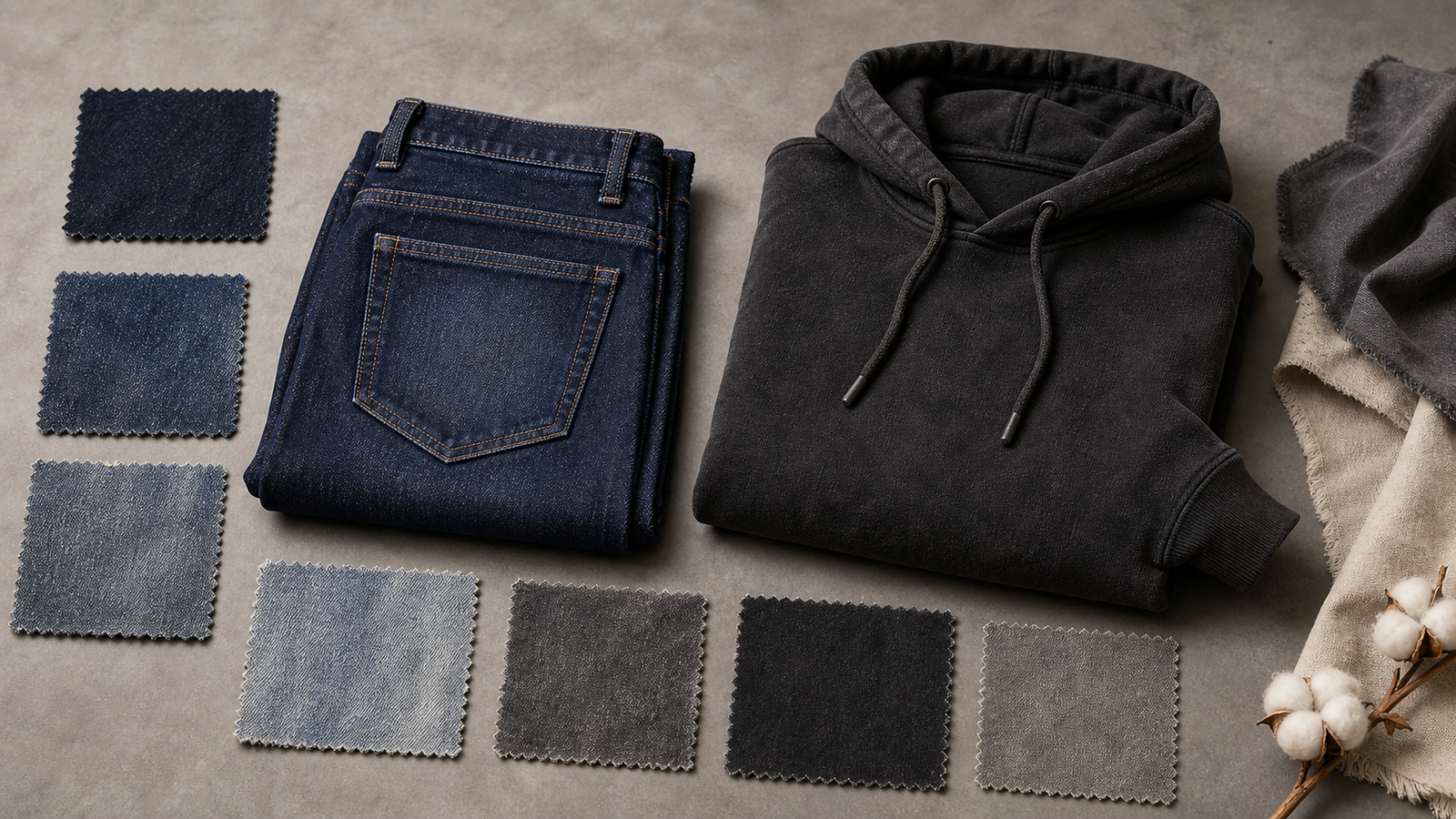
Tip: Ask ZEKA Apparel for their fabric swatch kit before you commit. Their access to the local fabric markets in China gives them an edge over clothing manufacturers in the USA who have limited material access.
2. “What is Your True Sample Lead Time?”
Time is money. Some factories promise 3 days but take 3 weeks. A reliable private label t shirt manufacturer should deliver a sample in 7-10 days.
Red Flag: If a factory says “we don’t do samples, just trust us for bulk,” run away. This is common with low-end white label suppliers.
3. “Is Your MOQ Scalable?”
This is where most brands fail. They either choose a factory with an MOQ of 500 (too high) or a POD service with an MOQ of 1 (too expensive per unit).
The Sweet Spot: Look for the “Goldilocks” zone—factories like ZEKA that offer MOQs of 50-100 pieces. This allows you to launch 5 different designs with the same budget that would only get you 1 design at a big factory.
FAQ: Common Questions About Apparel Manufacturing
Q: Should I use private label hat manufacturers in the USA or China?
A: While a private label hat manufacturer in the USA might seem appealing for shipping speed, the reality is that 90% of the raw materials (snapbacks, brims, fabrics) still come from Asia. By manufacturing in China, you go directly to the source, cutting out the logistical middleman and gaining access to a wider variety of custom materials.
Q: Is white label clothing cheaper than private label?
A: Upfront, yes. White label clothing wholesale is cheaper to start because there are no pattern fees. However, private label clothing is cheaper in the long run because your unit costs are lower, your margins are higher, and you own the intellectual property of the design.
Q: Can I transition from white label to private label later?
A: Yes, this is a common path. Many brands start with white label apparel to test a logo. Once they sell 100 units, they switch to a manufacturer like ZEKA to create a custom “V2.0” of the product with better fabric and fit.
Conclusion: The Best Decision for Your Brand
The landscape of best private label clothing manufacturers is vast, but your choice comes down to your business model.
If you want the cheapest price possible and don’t care about quality? Choose a massive white label manufacturer in Southeast Asia.
If you want zero risk and zero profit? Choose a Drop-shipping platform.
If you want to build a respected brand with premium products, custom fits, and manageable inventory risk?
ZEKA Apparel stands out as the clear winner for 2026. Their unique combination of low MOQ (50 pcs), fast sampling (7-10 days), and deep expertise in private label t-shirts and hoodies makes them the ideal partner for the modern fashion entrepreneur.
Don’t let your brand get lost in the sea of generic white label clothes. Take control of your supply chain today.
 English